Dubai Remote Work Visa 2026: Requirements, Cost & How to Apply
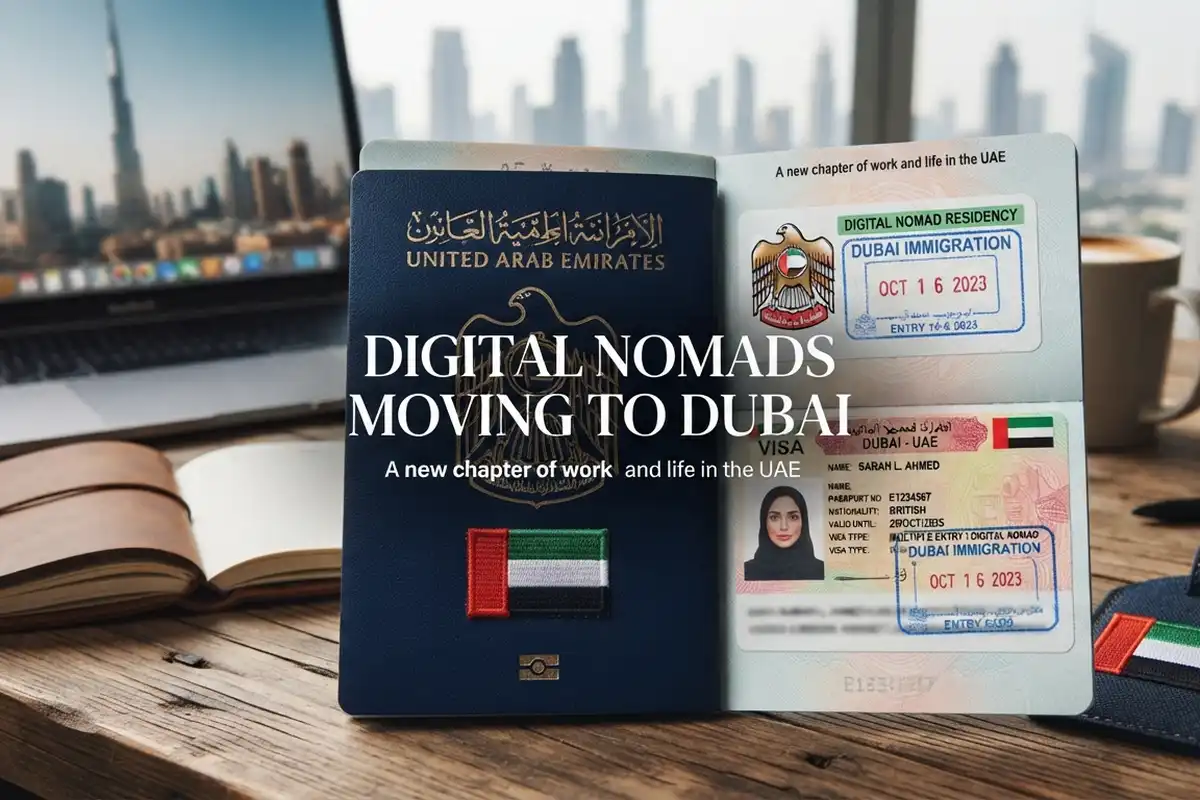
Last updated: 8 October 2026. Check the official GDRFA page before you apply, as fees and requirements change.
Quick answer: Dubai’s remote work visa (the Virtual Working Programme, called a “virtual work residence” by GDRFA) is a one-year, renewable residence visa for people who work remotely for an employer or business outside the UAE. You need proof of remote work, a monthly income of at least USD 3,500, valid health insurance, and a passport valid for at least six months. You can apply online through Dubai’s GDRFA Smart Services using UAE Pass.
On this page: What it is · Requirements · Documents · Cost · How to apply · Family, renewal & stay rules · Tax · Other visa options · Is Dubai right for you? · FAQ
What is the Dubai remote work visa?
It allows foreigners to live in Dubai for up to a year while working remotely for a company or clients based elsewhere. It is not a work permit for a UAE-based employer, nor can it be used to secure local employment. It is issued by Dubai’s General Directorate of Residency and Foreigners Affairs (GDRFA), and applications are processed through GDRFA Smart Services or the Visit Dubai program website. There is also a federal-level virtual work option available through the Federal Authority for Identity, Citizenship, Customs and Port Security (ICP), which is suitable for applicants residing in other emirates.
Requirements
Requirement | Detail |
|---|---|
Age | 18 or over |
Work | Remote employee of a non-UAE company, or business owner/freelancer with clients outside the UAE |
Income | At least USD 3,500 a month (or equivalent), shown with a salary certificate or bank statements |
Passport | Valid for at least 6 months |
Health insurance | Valid UAE cover for the visa term |
Medical fitness test | Required during residence issuance |
Emirates ID | Applied for as part of the process |
Some sources quote a higher USD 5,000 threshold for business owners, but the official GDRFA and ICP service pages list USD 3,500, so confirm which applies to your category.
Documents to prepare
- Passport copy (valid 6+ months) and a recent photograph
- Proof of remote work: an employment contract that confirms you can work remotely, or business registration and client contracts if self-employed
- Proof of income: a salary certificate plus bank statements showing the income arriving. Sources disagree on whether three or six months are required, and one guide says the requirement changed to six months in January 2026, so plan for six
- Health insurance valid in the UAE
- Accommodation details in Dubai
- Previous UAE visa or entry stamp, if you’re already in the country
GDRFA may ask for more depending on your profile. Documents in other languages may need translation or attestation.
Cost: what to expect
Reported costs vary a lot, so use the official fee calculator before you pay. GDRFA’s fee lines for the virtual work visa include:
Fee | Amount |
|---|---|
Virtual work visa fee | AED 200 + 5% VAT |
Residence permit fee | AED 200 |
In-country processing (if already in the UAE) | AED 500 |
Knowledge Dirham | AED 10 |
Delivery | AED 20 |
In addition, you need to pay for the medical test, Emirates ID, and health insurance. Currently, agencies quote approximately AED 1,535 for total government fees (based on data from the spring of 2026), lower than the previous estimate of AED 4,000. There is an additional service fee if you apply in person at an AMER center. Some older guides mention a program fee of “USD 287,” which likely refers to the previous payment system. Consider any figure merely an estimate until you have processed your application through the official system.
How to apply for the Dubai remote work visa
- Check you qualify. Confirm your income, employer or client structure, and passport validity.
- Gather your documents as listed above, including six months of statements.
- Buy health insurance that covers you in the UAE.
- Apply online. Use GDRFA Smart Services with UAE Pass, or the Dubai Virtual Working Program portal. Alternatively apply through an AMER center or licensed PRO.
- Pay the fees and keep your receipts.
- Receive the entry permit, then travel to Dubai. GDRFA gives you 60 days from entry to finish the residence steps.
- Complete the medical test and Emirates ID application.
- Receive your residence visa, which is valid for one year.
Processing times are often reported as a few weeks to two months. Government processing times aren’t guaranteed, so don’t book non-refundable flights until your entry permit is approved.
Family, renewal and stay rules
- Family: spouses and dependent children can be sponsored if the general sponsorship requirements are met.
- Renewal: the visa is renewable by a new application, as long as you still meet the income and remote-work conditions.
- Time abroad: holders generally must not stay outside the UAE for more than six consecutive months, or the residence can lapse.
- Working locally: the visa is for working for non-UAE clients and employers. Taking local employment requires a different permit.
Tax: what the visa changes and what it doesn’t
The UAE does not levy personal income tax on employment earnings. Many assume this means “I won’t have to pay tax anywhere,” but this is a misconception. You may still be subject to taxation by your home country based on citizenship (for instance, US citizens are taxed on their worldwide income), tax residency criteria, the number of days spent abroad, or where your business is managed. You should only obtain a UAE tax residency certificate if you meet the UAE’s residency requirements, which are generally based on the number of days you have spent in the country.
If you establish a company in the UAE, a 9% corporate tax may apply, and free zones have their own specific rules. Consult a tax adviser in your home country before relocating. This information is for general purposes only and does not constitute tax advice.
Remote work visa vs other options
Option | Best for | Duration | Notes |
|---|---|---|---|
Remote work visa | Employees or freelancers earning abroad | 1 year | USD 3,500/month; no UAE company needed |
Freelance permit/ Free Zone license | Freelancers who want to serve UAE clients | 1 – 3 years | License fees apply; no income minimum |
Company formation | Business owners and founders | 1 – 3 years | Setup and licence costs; corporate tax rules |
Green Visa | Skilled workers, freelancers | 5 years | Income conditions apply |
Golden Visa | Investors, specialist talent | 5 – 10 years | See our Golden Visa Guide |
Eligibility for the longer visas changes often. Verify the current rules before relying on this table.
Is Dubai right for remote workers?
Dubai is efficient and safe, and it has fast internet, modern services and strong flight links. For remote workers, those basics matter more than glamour. The UAE was reported as the second most attractive destination for digital nomads in 2025, up from fourth in 2023, according to a Gulf News report on a global ranking.
It tends to suit people who:
- already earn remotely and have stable income
- value safety, infrastructure and convenience
- travel often
- can handle high living costs and manage money carefully
It suits people less if they expect:
- cheap living
- a walkable, European-style city everywhere
- an underground arts scene
- easy long-term citizenship
Practical points:
- Cost. Rent and international schooling are the big items. See our Cost of Living in Dubai guide for budgets, and Is Dubai Expensive Compared to Other Global Cities? for context. Lifestyle inflation is real, so budget with discipline, especially if your income fluctuates.
- Where to live. Many remote workers choose Business Bay, JLT, Dubai Marina or JVC for access to coworking spaces and the metro.
- Community. Roughly nine in ten residents are expatriates, English dominates business, and coworking, founder and freelancer communities are plentiful. But the social scene can feel transactional, and isolation after the first months is common.
- Summer. From May to September, outdoor life is limited for much of the day.
- Internet and calls. Home internet is available from du and e&, and plans start from around AED 299 a month. Some voice-over-internet services are restricted in the UAE, so check that the tools your clients use work before you move.
- 2026 context. Regional events earlier this year affected flights and, in some cases, travel advisories and insurance terms. Check current airline schedules and your insurer’s conditions before booking.
Some remote workers leave, because they miss nature, costs rise, or Dubai’s pace feels exhausting. Both outcomes are common, and that honesty should be part of your decision.
Frequently Asked Questions
Sources: Dubai GDRFA and the Virtual Working Program portal, ICP, and recent visa guides. Government requirements change. We update this page when they do.