Finally Understanding Dubai’s Crazy Traffic
Nobody really warns you about Dubai traffic properly.
People talk about the skyscrapers. The beaches. The shopping malls bigger than small countries. The futuristic metro stations. The luxury cars parked outside cafés like they accidentally fell out of a music video.
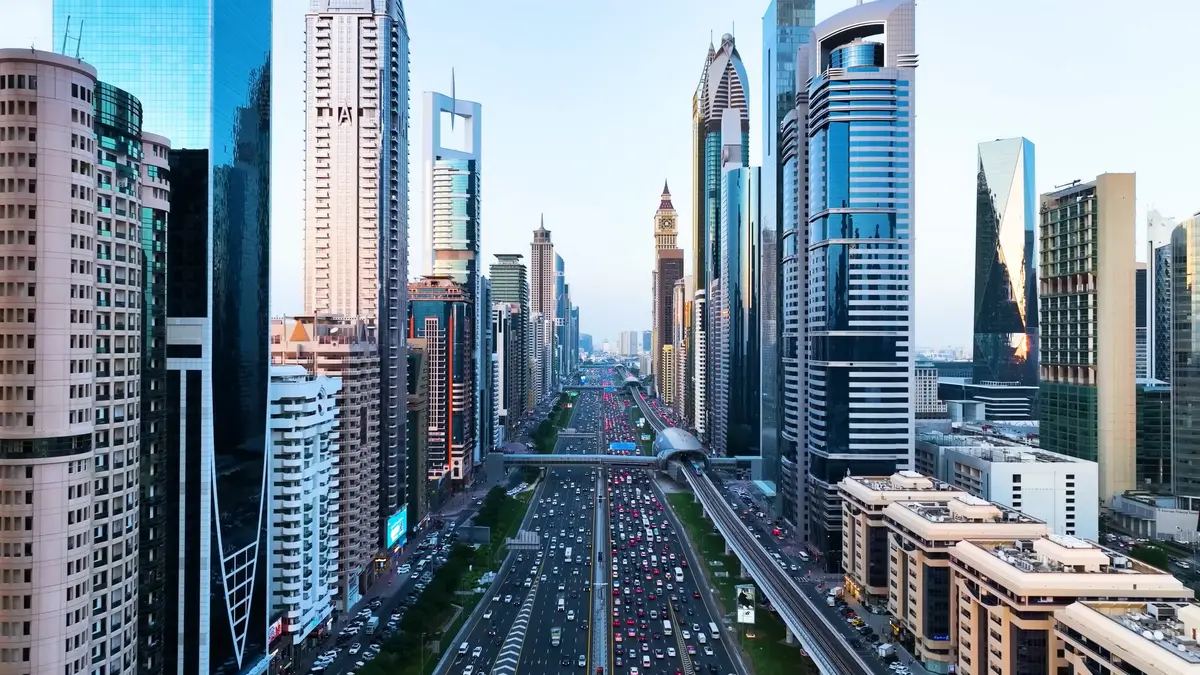
But the traffic? That comes later. Usually around 7:12 in the morning when you’ve moved exactly fourteen meters in twenty minutes on Sheikh Zayed Road and started questioning every life decision that brought you there.
And honestly, the strange part is this: Dubai traffic somehow feels both extremely organized and completely chaotic at the same time.
It’s not random chaos. There’s a pattern to it. A personality almost. Once you live here long enough, you stop seeing it as “bad traffic” and start realizing it’s actually the side effect of a city growing faster than almost any modern city on earth.
That doesn’t make it less frustrating. But it does make it easier to understand.
Dubai Was Never Built for This Many People This Fast
This is the part many outsiders miss.
Dubai’s population growth has been aggressive. Fast. Almost unnatural at times. Entire communities appeared in what used to be open desert. Roads expanded constantly, yet somehow they still filled up immediately.
One year a road feels empty.
The next year there’s a queue forming before sunrise.
The city keeps stretching outward too. People live farther from where they work because rent changes, jobs move, schools move, businesses shift. So daily commutes become longer and more complicated.
Someone might live in Dubai South, work in Business Bay, drop kids in Al Barsha, and somehow still try to make it home before evening traffic turns into a psychological experiment.
That’s not unusual anymore.
Dubai didn’t gradually evolve over 80 years like many older cities. It accelerated. Hard.
And traffic is one of the visible side effects of that acceleration.
Everyone Is Driving at the Same Time
Sounds obvious. But in Dubai, it’s extreme.
The city operates on synchronized movement.
Morning:
everybody leaves together.
Evening:
everybody returns together.
Weekend:
everybody suddenly decides to go to Dubai Mall at exactly the same hour for reasons nobody fully understands.
There are specific choke points that almost every resident eventually memorizes:
- Sheikh Zayed Road
- Al Khail Road
- Hessa Street
- Business Bay crossings
- Marina exits
- Trade Centre area
You can literally feel the collective stress building in certain areas around 6 PM.
And unlike cities where people walk more or use bicycles regularly, Dubai is deeply car-dependent in many areas. The weather alone pushes people toward driving for much of the year.
Even short distances often become car journeys.
The City Attracts Drivers From Everywhere
This is where things get interesting.
Dubai roads are full of people from different countries, different driving cultures, different habits, and very different levels of patience.
Some drivers are ultra-cautious.
Some drive like they’re qualifying for Formula 1.
Some treat indicators as optional decoration.
Others brake so suddenly you start seeing your ancestors.
It creates this strange ecosystem where everybody technically follows the same road rules but emotionally operates under different traffic philosophies.
And to be fair, Dubai roads themselves are actually impressive. Wide highways. Modern systems. Constant infrastructure upgrades. Compared to many global cities, the road quality is genuinely excellent.
But even excellent roads struggle when millions of daily movements collide together.
Luxury Cars Make Traffic Feel Even More Intense
This sounds superficial, but it changes the atmosphere.
Traffic in Dubai doesn’t look normal.
You’re sitting between:
- a Lamborghini
- three white Nissan Patrols
- delivery bikes
- construction trucks
- tourists in rental convertibles
- exhausted office workers
- and someone aggressively flashing headlights from two centimeters behind you
All within the same lane.
The visual intensity adds psychological pressure. The roads feel faster, more impatient, more performative somehow.
People often joke that Dubai traffic is less about transportation and more about dominance negotiations.
Honestly… sometimes it does feel that way.
Hessa Street Deserves Its Own Documentary
At this point, Hessa Street is basically part of Dubai folklore.
Residents discuss it the way soldiers talk about historic battles.
If you know, you know.
A ten-minute route can suddenly become forty-five minutes for no visible reason. One tiny slowdown multiplies instantly because the volume is massive.
And the thing is, Dubai constantly tries to fix these bottlenecks:
- bridge projects
- road widening
- smart traffic systems
- new exits
- upgraded intersections
But population growth keeps catching up.
It’s like trying to empty water from a bathtub while the tap is still running at full speed.
People Complain About Dubai Traffic Because They Care About Time
There’s another layer here.
Dubai is a productivity-driven city.
People are busy. Schedules matter. Delays feel expensive. A lot of residents came here chasing opportunity, money, growth, or career progression. Time becomes emotionally valuable.
So traffic frustration is not just about sitting in a car.
It’s about:
- missed gym sessions
- late school pickups
- shorter evenings
- delayed meetings
- mental exhaustion
- reduced family time
After a while, long commutes slowly wear people down. Even calm people become irritated.
And yet strangely, most residents adapt.
That’s the weird part.
People eventually develop survival systems:
- leaving before sunrise
- avoiding certain exits permanently
- scheduling dinners around traffic patterns
- memorizing hidden routes
- using navigation apps almost religiously
Dubai residents become part-time traffic strategists without realizing it.
Public Transport Helps… But Not Everywhere
The Dubai Metro is honestly one of the city’s best decisions.
Clean. Reliable. Air-conditioned. Fast.
For many people, it saves sanity.
But Dubai is geographically spread out. Some residential areas still depend heavily on cars for practical daily movement. Last-mile connectivity remains an issue in certain communities.
And during summer, even short outdoor walks feel longer than they actually are.
So despite metro expansion, private vehicles still dominate daily life.
The Truth Nobody Likes Saying
Here’s the uncomfortable reality.
Dubai traffic is partly the price of Dubai’s success.
That doesn’t mean people should just accept endless congestion quietly. Infrastructure absolutely needs to keep evolving.
But the traffic exists because millions of people actively want to live, work, visit, invest, and build lives here.
Busy cities create busy roads.
And Dubai became globally important very quickly.
Honestly, if the roads were permanently empty in a city growing this aggressively, that would probably mean something had gone wrong economically.
Still, there’s a balance point every major city eventually has to solve.
Because no skyline is impressive when people spend half their life trying to reach it.
And maybe that’s the real story behind Dubai traffic.
Not dysfunction.
Not failure.
Just a city growing so fast that the roads are still trying to catch up with the ambition.