Why the UAE’s Historic Neighborhoods Still Matter in a Modern World
There is this thing people say about the UAE, especially about Dubai. That it is always looking forward. Bigger buildings, newer roads, smarter systems. It almost feels like the past gets quietly pushed aside to make space for what comes next. And to be fair, that’s part of the appeal. People come here because things move fast.
But then you step into an older neighborhood. Not by accident, usually. Maybe someone told you about it, or maybe you just took a wrong turn and ended up there. And suddenly the pace changes. The air feels different. Not physically maybe, but something shifts. The noise is softer, more human. And you start wondering why these places feel… important.
Not in a grand, dramatic way. Just quietly important.
A Different Kind of Time
In areas like Deira or Bur Dubai, time doesn’t move the same way it does on Sheikh Zayed Road.
You won’t see glass towers everywhere. You won’t see the latest cafes designed for Instagram. What you will see is repetition. Shops that have been there for years. Maybe decades. Tailors, small grocery stores, electronics shops with slightly faded signs.
And the people. That’s where it really changes.
Shopkeepers who recognize faces. Cafeteria staff who remember your order after two visits. Delivery guys who sit outside and talk like they’ve known each other forever. There’s a rhythm to it. Not rushed. Not trying to impress.
It’s not that these areas are stuck in the past. That’s not it. They just didn’t feel the need to constantly reinvent themselves.
The Real Entry Point for Most People
Here’s something people don’t always say out loud.
For a huge number of expats, older neighborhoods are the first version of the UAE they experience.
Before the Marina apartments. Before the Downtown views. Before the upgrades.
They start in places like Al Karama or Satwa.
Rent is more manageable. Life is closer to the ground. You walk more. You notice things. You figure out how the city actually works, not just how it looks from a distance.
There’s a kind of honesty in that stage.
Shared apartments. Budget groceries. Late-night tea from small cafeterias. It’s not glamorous, but it’s real. And for many people, those years shape their entire relationship with the UAE.
Even if they later move to newer areas, something from that phase stays with them.
Culture That Wasn’t Designed
Modern parts of the city are impressive. No argument there. But they are designed. Planned carefully. Built with intention.
Older neighborhoods feel different because they weren’t shaped in the same way.
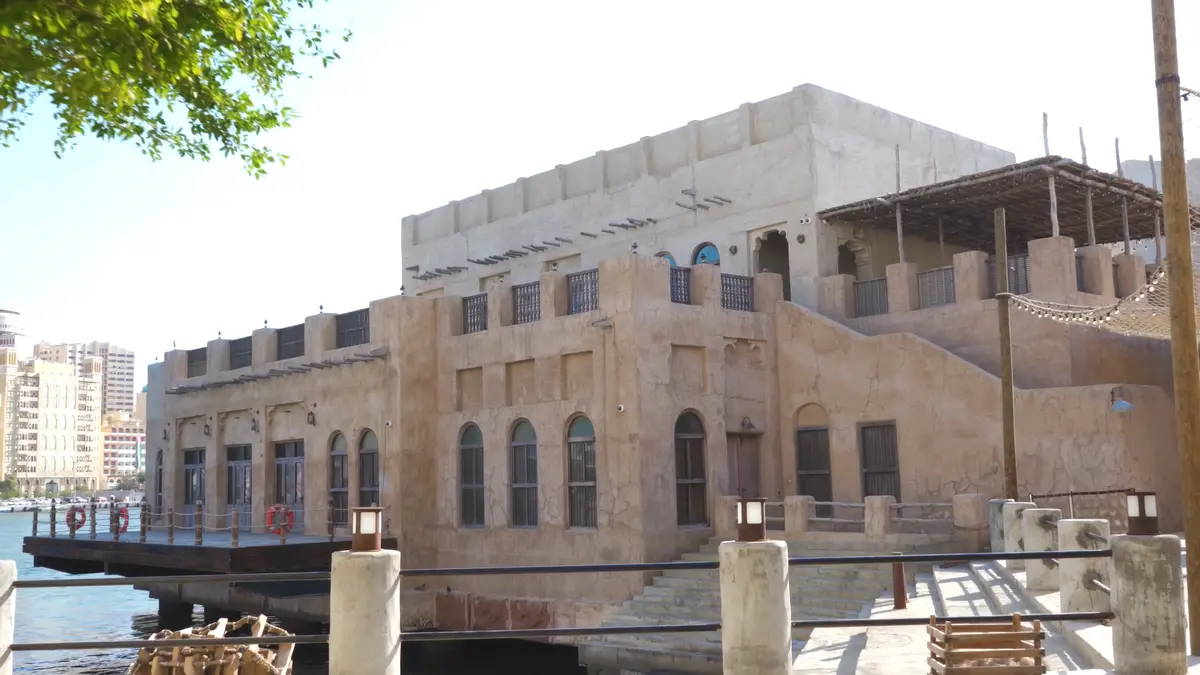
In Al Fahidi Historical Neighborhood, you see traditional architecture that actually tells a story. Wind towers, narrow lanes, buildings that respond to climate rather than aesthetics.
But even outside heritage zones, there’s culture in the everyday.
The mix of languages you hear in a single street. The food options that change every few steps. A Filipino bakery next to an Iranian restaurant, then an Indian cafeteria right beside it.
Nobody sat down and designed that mix. It just happened over time.
And that makes it feel alive.
The Economics Behind It
There’s also a practical side to why these neighborhoods matter.
Cities need layers. Not everyone can live in high-end developments. Not every business can afford premium rents. Older areas provide space for smaller businesses to exist.
Think about it. Where do new entrepreneurs start?
Not in expensive commercial towers. They begin in smaller shops, older buildings, places where the risk is lower. That’s where experimentation happens.
A small restaurant opens. A tailoring shop expands. A grocery store builds loyal customers over years.
Without these areas, the city becomes too polished. Too expensive. And ironically, less dynamic.
Because real growth often starts in modest places.
Memory in a Fast-Changing City
The UAE changes quickly. Anyone who has been here long enough will tell you that.
A road you used last year might look different now. A building disappears, something new rises in its place. It keeps things exciting, but it also creates a strange feeling.
Where do memories go when the physical space changes?
Older neighborhoods act like anchors.
They hold onto pieces of the past. Not perfectly, not untouched, but enough to give people a sense of continuity. A place where you can return and say, “this still feels familiar.”
That matters more than it seems.
Especially in a country where so many people are constantly moving in and out.
Not Everything Needs to Be Upgraded
There’s a quiet assumption in modern cities that newer is always better.
Better buildings. Better infrastructure. Better everything.
And in many ways, that’s true.
But sometimes improvement comes at the cost of character.
Older areas might not have the same level of polish. Parking can be difficult. Buildings show their age. Streets can feel crowded.
But they also have personality.
You can’t replicate that easily. You can try to design “old-style” spaces, but it rarely feels the same. Because real character comes from time, from use, from people interacting with a place over years.
Not from a blueprint.
The Human Scale
Walk through a modern district and everything feels… large.
Wide roads. Tall buildings. Big spaces.
It’s impressive, but sometimes it feels a bit distant.
In older neighborhoods, things are closer. More compact. More human.
You walk instead of drive. You notice details. You stop for small things. A quick tea. A short conversation. A shop you hadn’t planned to enter.
Life happens at eye level.
And that changes how you experience the city.
Tourists Are Starting to Notice
Interestingly, more visitors are beginning to explore these areas.
Not just the famous landmarks, but the everyday parts of the city.
Walking through Deira’s markets. Taking an abra across the creek. Sitting in small restaurants that don’t appear in travel guides.
It’s not about luxury. It’s about authenticity, even if that word gets overused.
People want to see how the city actually lives.
And older neighborhoods offer that.
A City Needs Balance
The UAE’s strength has always been its ability to move forward.
To build, to innovate, to adapt.
But movement alone isn’t enough.
A city also needs stability. Memory. Spaces that don’t change too quickly.
Older neighborhoods provide that balance.
They don’t compete with the future. They support it.
They remind the city where it came from, even as it keeps pushing ahead.
Conclusion
It’s super easy to get lost in how “new” everything in the UAE feels. Everything is just so fast, and they’re always building something bigger or better.
But honestly, if you just hang out in the older neighborhoods for a bit, you see a totally different side. It’s way more chill.
Not everything has to be about what’s coming next. Some spots are just about real life. People doing their thing, year after year, not really caring about the latest trends or being flashy. And I think that’s why these old areas are so important.
When a city is moving a mile a minute, these places are like the anchor that keeps the whole thing from floating away.