Global Signals: Why the UAE Is Betting So Heavily on Artificial Intelligence
Something has been shifting quietly over the past few years.
You can feel it if you spend enough time in the UAE. Not in an obvious, loud way like new skyscrapers or mega projects. It’s subtler than that. More… strategic. Almost like the country is preparing for something that hasn’t fully arrived yet.
Artificial intelligence sits right in the middle of that shift.
And if you look closely, the UAE isn’t just experimenting with AI. It’s leaning into it. Hard.
A Country That Thinks Ahead, Not Just Fast
There’s this assumption people make about the UAE. That everything here is about speed. Build fast, grow fast, move fast.
That’s partly true.
But underneath that, there’s something else. Long-term thinking.
The leadership here has always been aware of one uncomfortable reality. Oil won’t define the future forever. It built the foundation, yes, but it’s not the end game.
So the question becomes… what replaces it?
Tourism helps. Real estate helps. Finance helps.
But none of those feel like the next big leap.
Artificial intelligence, though. That’s different.
It’s not just an industry. It’s a layer that touches everything else.
AI Is Not a Sector Here. It’s a Strategy
In many countries, AI is treated like a tech topic.
In the UAE, it feels more like a national direction.
You see it everywhere with government services now. Like, these smart systems are just low-key taking over the jobs people used to do by hand. You got those chat boxes answering all your questions online, and these computer programs that somehow manage traffic and power and all that logistics services without anyone even noticing.
It’s not always visible unless you’re paying attention. But it’s there.
What’s interesting is that AI isn’t being boxed into one department or industry. It’s being spread across everything.
Healthcare. Transport. Security. Urban planning.
Even small interactions, like how services are delivered, are slowly changing.
And maybe that’s the real point. Not one big transformation. Thousands of small ones.
Global Competition Is Quietly Driving This
Here’s something people don’t talk about enough.
AI is not just about technology. It’s about positioning.
Countries are competing. Not loudly, but very deliberately.
The US leads in innovation. China moves aggressively in implementation. Europe focuses on regulation and ethics.
So where does the UAE fit?
It can’t outscale the US or China in raw tech development. That’s just reality.
But it can do something else.
It can become a place where AI is applied faster, tested faster, and integrated faster.
Almost like a real-world laboratory.
That’s a powerful position if you think about it.
Because in the long run, the countries that use AI effectively might matter just as much as the ones that create it.
Talent Is the Real Game
Technology doesn’t build itself.
The UAE understands this part very clearly.
There’s been a noticeable push to attract talent. Not just traditional professionals, but researchers, engineers, data scientists, founders.
And the approach is interesting.
Instead of trying to grow everything internally from scratch, the country opens doors. Visas, incentives, business-friendly policies. It creates an environment where skilled people actually want to stay.
It’s not perfect, of course. No system is.
But compared to many regions, the friction is lower.
And when talent moves, ideas move with it.
Education Is Slowly Catching Up
Another piece of the puzzle is education.
You can’t build an AI-driven future without people who understand it.
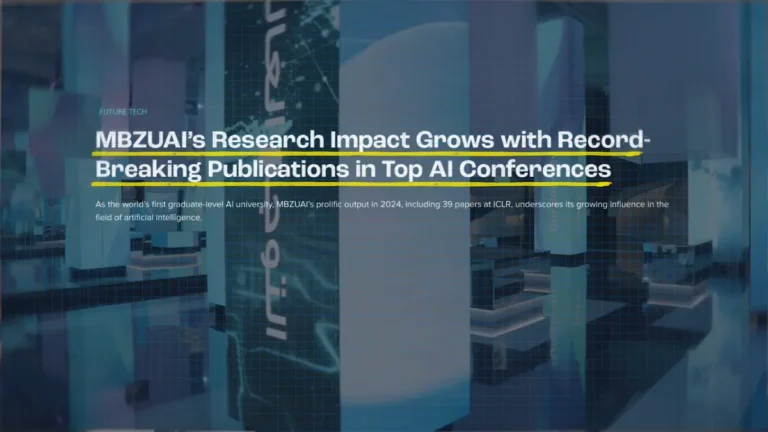
There’s been a gradual shift in how universities and institutions operate. More focus on data science, machine learning, robotics. New programs. Partnerships with global institutions.
It’s still evolving. Maybe even a bit uneven in places.
But the direction is clear.
The goal isn’t just to import knowledge forever. It’s to eventually produce it locally.
That takes time though. Years, maybe decades.
Infrastructure Already Exists. That’s the Advantage
Here’s where things get interesting.
Most countries trying to push AI face a problem. Their infrastructure isn’t ready.
The UAE doesn’t really have that issue.
High-speed connectivity. Advanced transport systems. Digitized government services. Smart city initiatives already in place.
So instead of building from zero, AI can be layered on top of existing systems.
That speeds everything up.
It’s like upgrading software instead of rebuilding hardware.
And honestly, that’s a huge advantage.
Risk Taking Feels Different Here
There’s also a mindset factor.
The UAE tends to experiment.
Not recklessly, but with a certain level of openness. New ideas are tested. Pilot programs launched. Adjustments made quickly.
In some countries, innovation gets slowed down by layers of hesitation.
Here, it feels more like:
Try it. See if it works. Improve it.
That kind of environment suits AI development perfectly.
Because AI itself is iterative. It learns, adapts, improves.
But There Are Questions Too
It’s not all smooth.
There are questions that don’t have easy answers yet.
What happens to jobs that become automated?
How does regulation keep up with fast-moving technology?
How do you balance innovation with privacy?
These aren’t UAE-specific problems. They’re global.
But they will show up here too.
And how they’re handled will shape how successful this whole AI push becomes.
So What Is the UAE Really Building?
It’s tempting to say the UAE is building an AI economy.
But that feels a bit narrow.
What’s actually happening is bigger than that.
The country is trying to position itself as a place where the future gets tested early. Where new systems are implemented before they become standard elsewhere.
A kind of preview of what other cities might look like in 10 or 15 years.
Not perfectly. Not completely. But noticeably.
Final Thoughts For UAE Betting On Artificial Intelligence
If you walk through Dubai today, you won’t always see artificial intelligence in obvious ways.
There’s no single moment where it all becomes visible.
But it’s there in small interactions. In how services respond. In how systems run. In how the city quietly adjusts itself.
And maybe that’s the real signal.
The UAE isn’t waiting for the future to arrive fully formed.
It’s trying to build parts of it early. Piece by piece. System by system.
You might not notice it immediately.
But give it a few years.
It’ll be hard to ignore.