UAE is a Global Meeting Point
Walk into one of the major airports in the UAE—say, Dubai International Airport and you don’t just arrive in a country. You arrive in motion.
Voices overlap. Not noise exactly… more like layers. English, Arabic, Hindi, Russian, Tagalog, French and sometimes all within a few steps of each other. Announcements echo in different accents. Screens flash destinations that feel scattered across the globe: London, Mumbai, Nairobi, Singapore. It’s not just a transit hub. It’s a kind of crossroads.
And the strange part? That same feeling doesn’t stop at the airport doors.
Airports as a Mirror of Global Connection
Airports usually give away the truth about a place. Some feel regional, some feel quiet, some feel isolated. The UAE’s airports feel… expansive.
You see people arriving from entirely different climates, cultures, and routines, all funneling through the same space. A businessman from Frankfurt checks his phone while a family from Kerala adjusts their luggage nearby. A tourist heading to Zanzibar stands next to someone flying in from Riyadh.
It’s constant movement, but it doesn’t feel chaotic. There’s a rhythm to it.
Maybe that’s the first hint as this country isn’t just connected to the world. It’s woven into it.
Step Outside — The Same Pattern Continues
What’s interesting is how quickly that airport feeling follows you outside.
Take a regular office in Dubai or Abu Dhabi. Sit in on a meeting and you’ll notice something subtle: perspectives don’t come from one place. Someone references a strategy used in the UK. Another mentions market behavior in India. A third talks about customer expectations in Saudi Arabia.
No one finds that unusual.
In many places, global exposure feels like an advantage. Here, it feels… normal. Expected, even.
The same goes for everyday life. A casual dinner might include conversations about different school systems, visa processes, or even food habits across countries. Not in a formal way, just casually, as if comparing notes.
Homes That Carry Pieces of the World
Step into residential areas and you start seeing smaller, quieter versions of this global mix.
Neighbors don’t always share the same background, language, or even daily schedule. One household might be preparing traditional Pakistani food, another cooking something Mediterranean, while a third orders takeaway from a Filipino restaurant nearby.
And over time, something shifts.
People start picking up habits from each other. Food choices change. Weekend routines evolve. Even the way people greet each other begins to blend.
It’s not forced. It just… happens.
Food as a Shortcut to Understanding Culture
If you really want to understand how global the UAE feels, don’t look at statistics rather look at food.
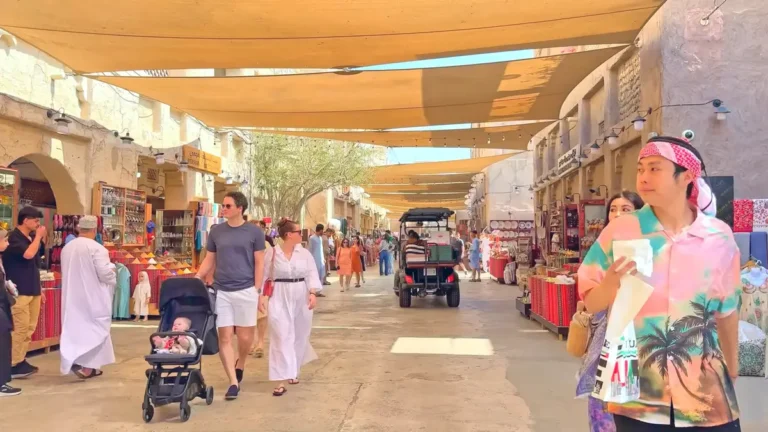
In cities like Dubai, you can go from a Lebanese breakfast to a Japanese lunch to an Ethiopian dinner without leaving a single district. It sounds like a cliché until you actually do it.
But more than variety, it’s the familiarity that stands out.
People don’t treat foreign cuisines as “foreign” for long. They try, repeat, adapt. Over time, dishes from other countries become part of regular eating habits.
Someone who grew up eating one type of cuisine ends up knowing five.
And that changes something deeper. How open people are to experiences they didn’t grow up with.
Schools and the Next Generation
If the present feels global, the future feels even more so.
Schools across the UAE bring together students from dozens of nationalities. Classrooms are not defined by a single culture but by a mix of them.
A child might celebrate Diwali with one friend, Christmas with another, and Eid at home and that’s all within the same year.
And because of that, cultural differences don’t feel distant or unfamiliar. They feel close. Personal.
This kind of exposure shapes how people think. It removes the idea that there’s only one “normal” way of living.
Workplaces Without a Single Cultural Lens
In many countries, workplaces follow a certain cultural rhythm. How meetings are conducted, how hierarchy works, how communication flows.
In the UAE, that rhythm is constantly shifting.
A team might include people from five or six different backgrounds, each bringing their own expectations about work. Some are direct, others more reserved. Some prefer structure, others flexibility.
Over time, teams find a middle ground.
It’s not perfect. Sometimes it’s messy. But it creates something unique—a hybrid work culture that doesn’t fully belong to any one place.
Conversations That Travel Across Borders
One of the more subtle effects of living in such an environment is how conversations change.
Topics rarely stay local for long.
Someone mentions a news story from Europe. Another brings up a trend in Southeast Asia. A third compares something to what they experienced in Africa.
Even casual discussions over coffee, during a ride, in a queue that tends to drift across borders.
And people listen. They’re curious.
There’s a quiet understanding that everyone carries a different version of the world in their head.
Comfort With Difference
In many parts of the world, cultural differences stand out.
In the UAE, they blend in.
Dress styles vary widely. Languages shift from one conversation to another. Social norms overlap in ways that might seem unusual elsewhere.
But here, it becomes part of the background.
People don’t stop to question it. They adjust, observe, and move on.
That kind of comfort doesn’t come from policy alone. It comes from daily exposure. Repetition. Familiarity.
A Place Where Trends Converge
Because of this constant exchange, the UAE often feels like a preview of global trends.
New ideas arrive quickly. Technologies spread faster. Business models are tested and adapted in real time.
It’s not that everything starts here but a lot of things pass through here.
Fashion, food, business strategies, digital habits… they all intersect, overlap, and sometimes reshape themselves in the process.
Final Thoughts for UAE as Global Meeting Point
So yes, airports tell part of the story. They show movement, connection, reach. But the real story begins after arrival—when that same diversity filters into daily life, into routines, conversations, and choices.
The UAE doesn’t feel like a single culture trying to define itself. It feels more like a space where multiple cultures meet, interact, and slowly influence each other. Not perfectly. Not evenly. But consistently.
And maybe that’s why it stands out.
Not because it belongs to one part of the world but because, in a quiet way, it belongs to many.